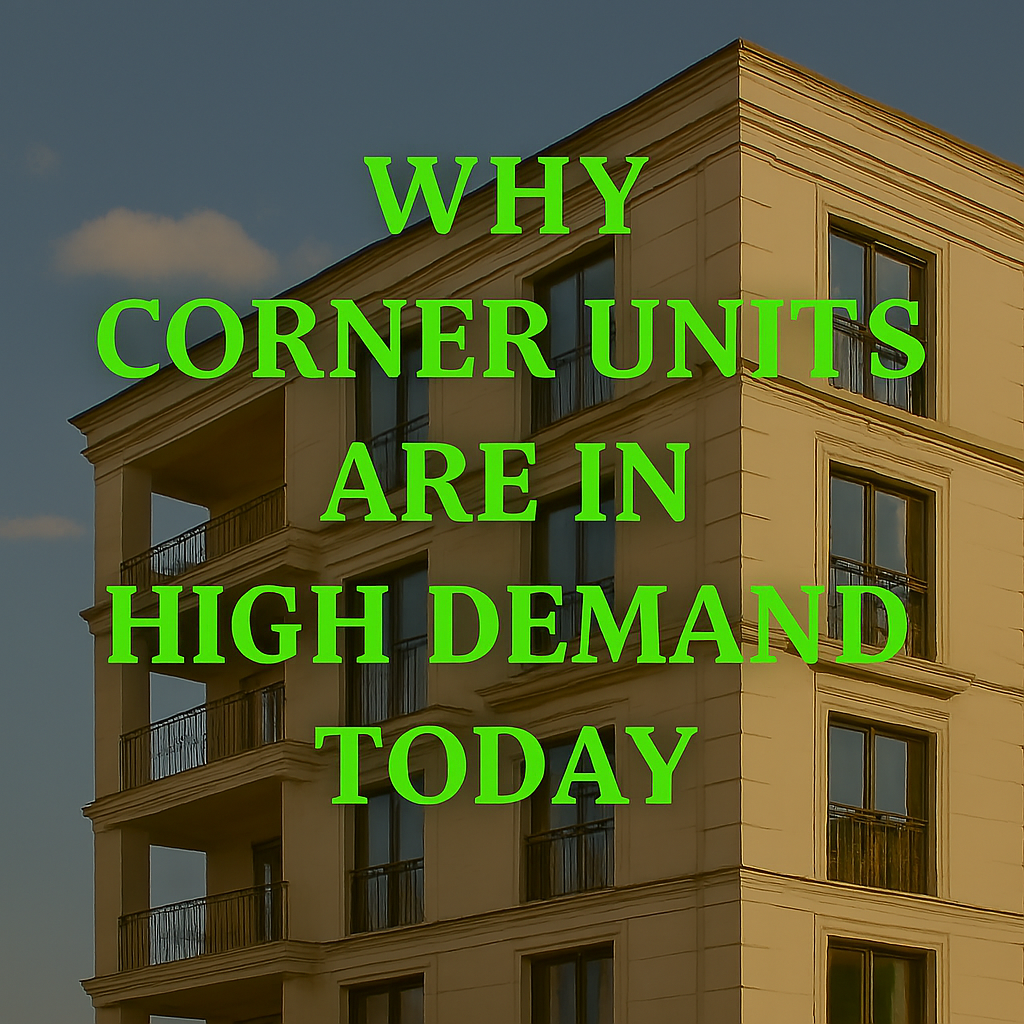

The Growing Preference for Corner Homes in Modern Residential Projects
In recent years, buyer preferences in Noida and Greater Noida have evolved significantly. Today’s homebuyers are not just looking at square footage or pricing — they are paying attention to layout efficiency, natural light, ventilation, and privacy.
This shift has made corner units one of the most in-demand configurations in residential projects.
But what exactly makes a corner unit so desirable?
Let’s explore the practical reasons behind this growing demand and how it influences pricing trends, resale potential, and long-term value.
📌 What Is a Corner Unit?
A corner unit is a residential apartment positioned at the corner of a building floor, typically having two open sides, better ventilation, more natural light, and enhanced privacy compared to standard units.
Corner homes usually have:
- Windows on two sides
- Reduced shared walls
- Better cross ventilation
- More sunlight exposure
This structural advantage directly influences lifestyle comfort.
📌 Why Are Corner Units in High Demand?
1️⃣ Better Natural Light
In regions like Greater Noida and Noida, sunlight exposure plays a key role in home comfort. Corner apartments allow light from two directions, reducing dependency on artificial lighting.
Buyers exploring 3 BHK flats in Greater Noida often prioritize such layouts because mid-sized family homes benefit significantly from cross ventilation.
2️⃣ Improved Ventilation
With two open sides, airflow improves naturally. This is particularly valuable in urban environments where airflow can otherwise feel restricted.
For families considering 2 BHK flats in Greater Noida, ventilation becomes a major decision factor.
3️⃣ Enhanced Privacy
Corner units typically share fewer walls with neighbors. This reduces noise disturbance and improves personal space.
In premium segments like 4 BHK flats in Greater Noida, privacy becomes an even more important factor, making corner positioning highly desirable.
👉 CTA: If you want to understand how layout and infrastructure impact property value, read our detailed guide on infrastructure-led growth in NCR.
📌 How Corner Units Impact Property Price
One common question is whether corner units are more expensive.
The answer is yes — but strategically so.
Why Corner Units Cost More
- Limited availability
- Higher demand
- Better ventilation and sunlight
- Stronger resale appeal
In Greater Noida, pricing trends show that corner homes in mid-sized configurations often command a slight premium compared to standard units.
For example, 3 BHK flats in Greater Noida price variations may differ based on:
- Floor level
- Facing direction
- Corner positioning
Similarly, in Noida, corner layouts in 3 BHK flats in Noida often attract higher buyer interest, which reflects in market pricing.
The premium exists because the benefits are tangible.
📌 Resale Value of Corner Units
Resale liquidity is one of the strongest advantages of corner homes.
When buyers enter resale markets, they prioritize:
- Light
- Ventilation
- Open views
- Privacy
Corner apartments meet these requirements effectively.
In both Noida and Greater Noida, mid-sized homes with better layout efficiency generally resell faster than internal units.
This makes corner positioning attractive not just for living — but for long-term investment.
👉 CTA: Before making a buying decision, you may also explore our blog on comparing new launch and ready-to-move homes.
📌 Rental Demand for Corner Homes
Tenants also prefer better ventilation and natural light.
In growing employment hubs across NCR:
- Professionals prioritize comfortable layouts
- Families prefer spacious, well-ventilated homes
Corner units often attract stable tenants due to these advantages.
This strengthens rental yield potential, especially in well-connected micro-markets.
📌 Psychological Appeal
Human preference for openness is natural.
Homes that feel:
- Brighter
- Airier
- Less congested
Create stronger emotional connection during site visits.
When buyers compare two identical units — one corner and one standard — the corner unit often wins.
📌 Availability Factor
Corner units are limited.
On each floor:
- Only a few apartments are positioned at corners
- Supply remains restricted
Limited supply + consistent demand = stronger pricing power.
This demand-supply imbalance contributes to sustained interest.
📌 Design Trends Supporting Corner Demand
Modern developers increasingly emphasize:
- Larger balconies
- Glass windows
- Scenic views
- Smart ventilation planning
Projects such as RG Mirage reflect how layout planning adapts to changing buyer expectations.
Similarly, RG Pleiaddes incorporates structural planning aligned with lifestyle preferences.
Meanwhile, RG Luxury Homes represents how premium residential planning integrates spacious corner positioning.
These projects illustrate how evolving design trends support the demand for corner units.
📌 Are Corner Units Worth the Premium?
Let’s analyze logically.
Advantages:
- Better living comfort
- Higher resale value
- Strong rental demand
- Limited supply
Considerations:
- Slightly higher purchase cost
- Higher floor-rise charges in some cases
If you plan long-term occupancy, the premium often justifies itself through improved quality of life.
If you plan resale in 5–10 years, stronger buyer preference supports liquidity.
👉 CTA: To avoid common investment mistakes, read our blog on real estate myths that stop buyers from investing.
📌 Greater Noida vs Noida: Demand Comparison
Both markets show preference for corner homes.
Greater Noida:
- Planned township layouts
- Wider roads
- Balanced sunlight exposure
Noida:
- Established infrastructure
- Corporate-driven rental demand
- Mature buyer base
Corner positioning adds value in both emerging and mature micro-markets.
📌 Investment Perspective
Corner units typically:
- Appreciate steadily
- Attract premium buyers
- Offer stronger emotional appeal
Mid-sized homes benefit most because they balance:
- Affordability
- Space
- Practical living
For example, demand patterns in 3 BHK flats in Greater Noida often show stronger buyer competition for corner layouts compared to standard internal units.
Why are corner units preferred?
Because they offer better light, ventilation, privacy, and resale value.
Do they cost more?
Yes, slightly — due to limited availability and higher demand.
Are they good for investment?
Yes, due to stronger resale appeal and rental preference.
Final Thoughts
The demand for corner units is not a trend — it is a structural preference driven by comfort, psychology, and practical benefits.
In evolving NCR markets like Noida and Greater Noida:
- Layout quality influences pricing.
- Ventilation and light impact lifestyle satisfaction.
- Limited supply strengthens demand.
Corner units combine these advantages.
Whether you are an end-user seeking comfort or an investor evaluating long-term value, corner positioning adds meaningful differentiation.
Real estate decisions should align with:
- Budget
- Holding period
- Lifestyle expectations
- Market research
Corner homes often tick multiple boxes — which explains their consistently high demand.
People Also Ask
What is a corner unit in a residential project?
A corner unit is an apartment located at the corner of a building floor, typically offering two open sides, better ventilation, more natural light, and increased privacy compared to interior units.
Now let’s explore this in depth.
In most residential towers, apartments are arranged along corridors. Units placed in the middle share walls on both sides. However, a corner unit sits at the edge of the structure, which means:
- It usually has windows on two sides
- It receives more airflow
- It has fewer shared walls
- It offers better natural lighting
This structural positioning directly impacts comfort and lifestyle.
Why Layout Matters
Modern homebuyers in Noida and Greater Noida are becoming more layout-conscious. They don’t just look at square footage. They examine:
- Window placement
- Sunlight direction
- Balcony openness
- Privacy from neighbors
Corner apartments typically perform better in these areas.
Emotional Appeal
When buyers visit sample homes, corner layouts often feel:
- Brighter
- Airier
- More spacious
Even if carpet area remains the same, perception of openness increases property appeal.
Important Consideration
Not all corner units are identical. Buyers should check:
- Facing direction
- Floor level
- Adjacent structures blocking light
- Noise exposure from roads
A well-positioned corner unit combines structural advantage with proper orientation.
In summary, a corner unit is defined not just by its position but by the lifestyle advantages it provides.
Why are corner units more expensive than regular units?
Corner units are generally more expensive because they offer better ventilation, increased privacy, more natural light, and limited availability within a building, which increases demand.
Now let’s understand the pricing logic.
Limited Supply
On any given floor:
Only a few units are positioned at corners.
The rest are internal units.
Lower supply naturally increases pricing power.
Higher Buyer Preference
Buyers actively search for homes with:
Dual-side openings
Larger balconies
Better views
This demand-supply imbalance supports premium pricing.
Better Resale Value
Corner units often:
Sell faster in resale markets
Attract higher negotiation leverage
This resale strength adds perceived value.
Cost vs Value
The price difference is usually:
Moderate, not extreme
Justified by structural advantage
Buyers often feel the additional cost is worthwhile due to long-term benefits.
Premium pricing reflects comfort, not just positioning.
Do corner units have better ventilation and natural light?
Yes, corner units typically have better ventilation and natural light because they have openings on two sides, allowing cross airflow and increased sunlight exposure.
Ventilation is critical in urban residential living.
Cross Ventilation Advantage
With two open sides:
Air enters from one direction
Exits from another
Reduces indoor humidity
This improves indoor air quality.
Sunlight Exposure
Natural light:
Reduces electricity usage
Enhances mood
Prevents dampness
Homes with more sunlight often feel more welcoming and spacious.
Health Perspective
Good airflow and sunlight:
Reduce mold formation
Improve comfort
Enhance living quality
However, orientation matters. Buyers should evaluate:
Sun direction
Surrounding building shadows
Seasonal wind patterns
Well-positioned corner homes maximize these natural benefits.
Are corner units good for resale value?
Yes, corner units often have stronger resale value because they are in limited supply and highly preferred by buyers seeking better light, ventilation, and privacy.
Resale depends on buyer demand.
When two similar units are available:
Buyers often choose the corner layout.
Why Resale Is Strong
Emotional appeal
Better layout efficiency
Perceived exclusivity
Limited availability creates competitive interest.
Liquidity Factor
Properties that:
Attract more buyer inquiries
Stand out in listings
Usually sell faster.
Corner units generally check these boxes.
Do corner apartments offer more privacy?
Yes, corner apartments typically offer greater privacy because they share fewer walls with neighboring units and often have less corridor traffic nearby.
Privacy matters in high-density buildings.
Shared Wall Reduction
Interior units:
Share walls on both sides
Corner units:
Usually share only one side
This reduces:
Noise transfer
Vibration disturbance
Reduced Foot Traffic
Since they are positioned at the end:
Fewer people walk past the door
Noise levels remain lower
Privacy improves overall living comfort.
Are corner units better for families?
Corner units are often preferred by families because they provide better airflow, natural lighting, and reduced noise, which enhances daily comfort and long-term livability.
Families value:
Comfort
Healthier indoor environment
Quiet surroundings
Children benefit from:
Better ventilation
Natural light for study areas
Elderly members benefit from:
Improved airflow
Reduced dampness
Corner layouts support family-oriented living patterns.
Do corner units appreciate faster than regular units?
Corner units may appreciate slightly faster than regular units because they are limited in supply and consistently in demand among buyers.
Appreciation depends on:
Location
Infrastructure
Demand trends
However, layout advantage strengthens:
Buyer preference
Negotiation leverage
In competitive markets, unique features support better resale growth.
Though appreciation difference may not be dramatic, liquidity advantage often exists.
Are there any disadvantages of corner units?
Corner units may sometimes face slightly higher pricing and exposure to external weather elements, depending on orientation and building design.
Potential drawbacks include:
Slight premium cost
More exterior wall exposure
Possible heat exposure in certain directions
However, modern insulation and planning reduce these concerns significantly.
Buyers should inspect:
Sun direction
Road noise
Surrounding open space
Balanced evaluation is important.
Do corner units attract better rental demand?
Yes, corner units often attract strong rental demand because tenants prefer better light, airflow, and privacy.
Tenants evaluate:
Comfort
Ventilation
Balcony views
Corner positioning improves perceived lifestyle value.
Higher tenant satisfaction:
Reduces vacancy
Encourages long-term stays
Rental demand is driven by livability.
Should you always choose a corner unit if available?
While corner units offer multiple benefits, the right choice depends on budget, orientation, and overall project planning rather than position alone.
Consider:
Budget flexibility
Floor level
Facing direction
Long-term plans
If price premium fits within financial comfort and layout suits your lifestyle, corner units often provide meaningful advantages.
However, location fundamentals and project quality remain more important than positioning alone.